Check Your Air Filter First
The single most common reason an AC stops cooling effectively is a dirty air filter. In Dallas, where dust, pollen, and allergens are high year-round, air filters can clog quickly — especially during peak summer when your AC runs almost continuously. A clogged filter restricts airflow across the evaporator coil, reducing your system's ability to absorb heat from your home. The fix is simple: check your filter and replace it if it's dirty. During Dallas summers, plan to change your filter every 30 days.
Low Refrigerant Is a Common Culprit
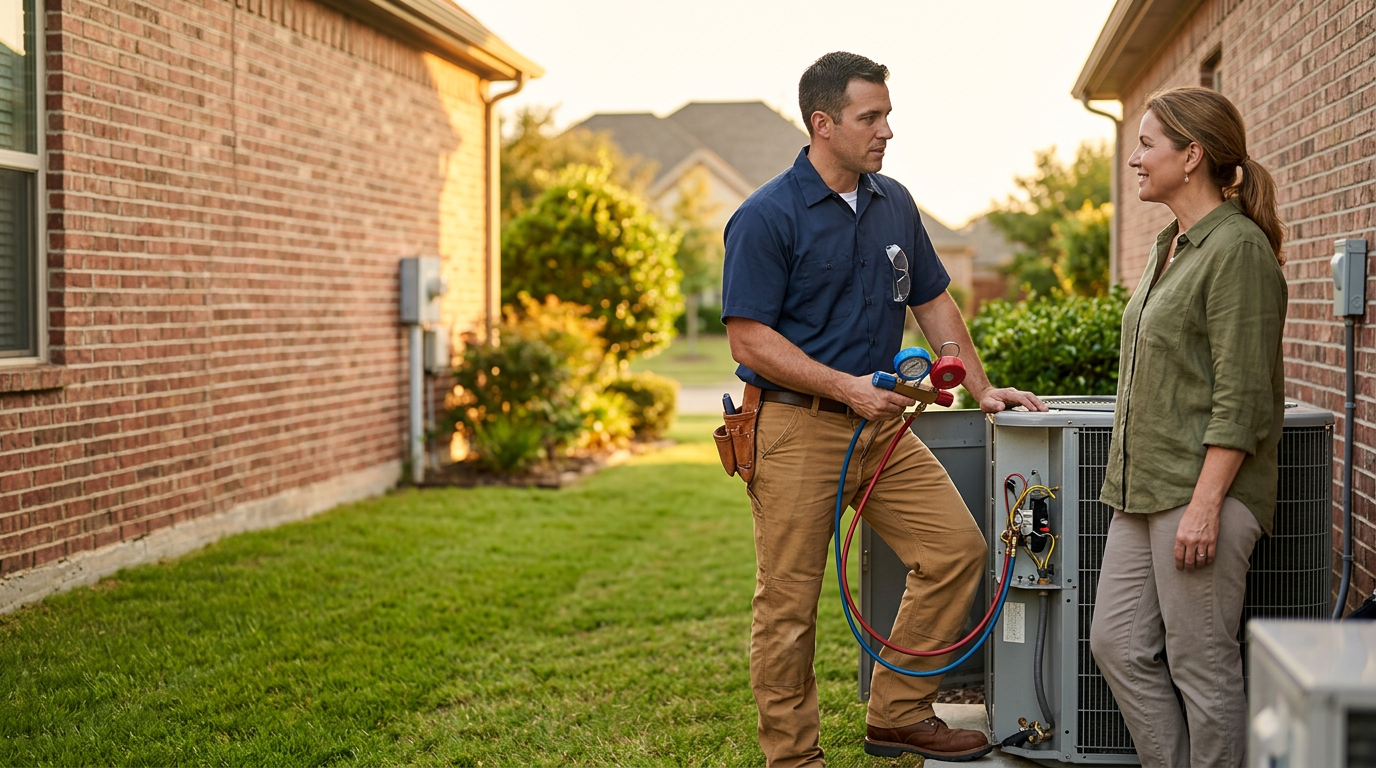
Your AC uses refrigerant to absorb heat from indoor air and release it outside. If your system has a refrigerant leak, levels drop and cooling capacity decreases. Signs of low refrigerant include warm air from vents, ice forming on the refrigerant line or evaporator coil, and higher-than-normal energy bills. This is not a DIY fix — refrigerant handling requires EPA certification and specialized equipment. A professional technician will find and repair the leak, then recharge your system to the correct level.
Thermostat Problems
Sometimes the issue isn't your AC system at all — it's the thermostat. Check that it's set to "cool" mode, the fan is on "auto" (not "on"), and the temperature setting is below the current room temperature. If you have a battery-operated thermostat, replace the batteries. An aging or malfunctioning thermostat may need to be replaced, which is an affordable fix that can significantly improve your system's performance.
When to Call a Professional
If replacing the filter and checking the thermostat doesn't resolve the issue, it's time to call a professional. Issues like refrigerant leaks, frozen coils, failing compressors, and electrical problems require trained technicians with proper tools and expertise. The longer you run an AC with these issues, the more damage can occur — potentially turning a minor repair into a major expense.