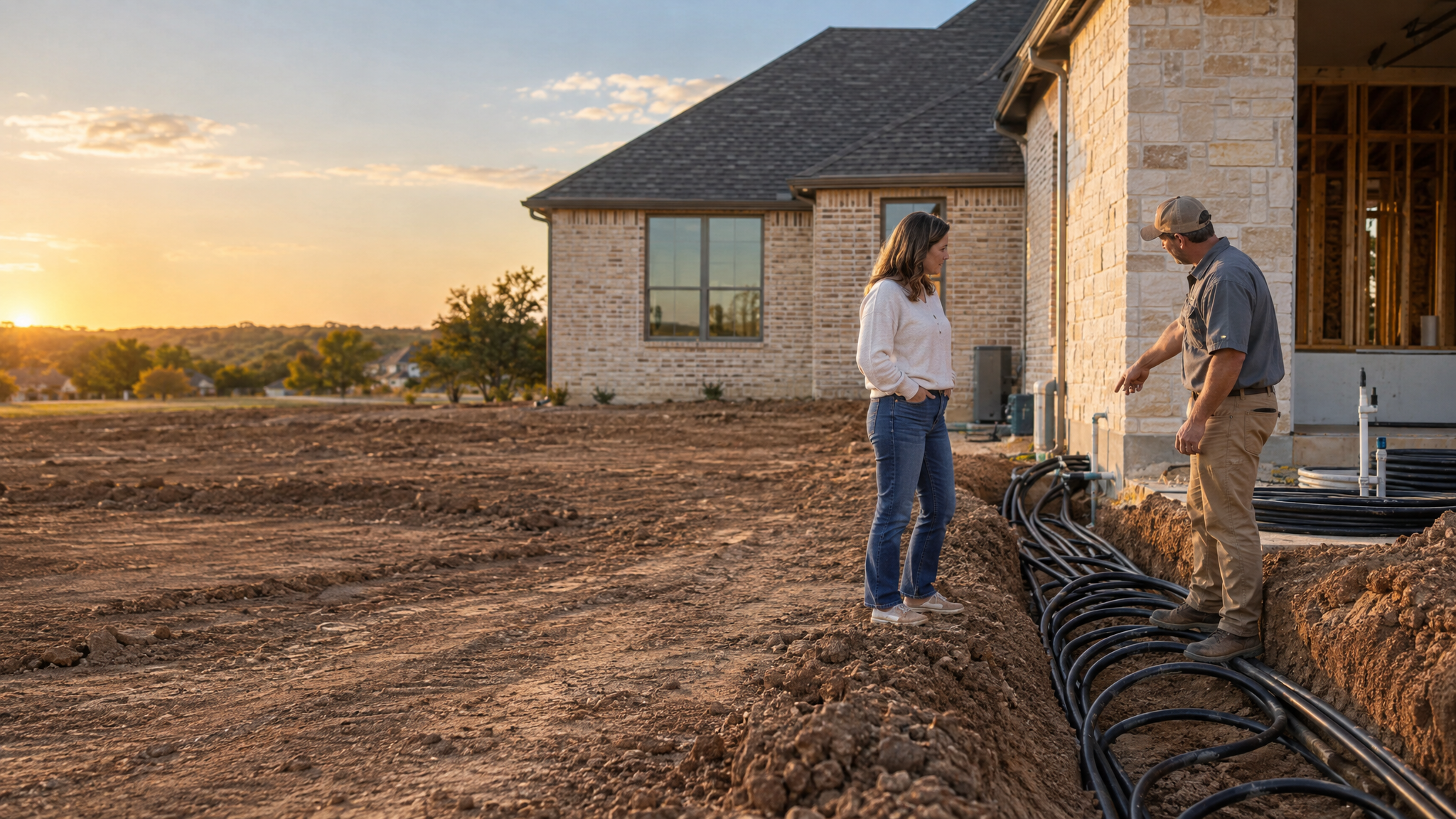
Geothermal heating and cooling — also called a ground-source heat pump — uses the steady temperature of the ground to heat and cool your home. Whether you already have a geothermal system that needs attention, you're considering one for your current home, or you're planning a new build, Climate Codes can connect you with an HVAC provider who works on geothermal systems in your area. Not sure what kind of system you have? That's fine — send a request and we'll help sort it out.
Also called a ground-source heat pump
Existing homes & new builds
No system details needed to ask
Ask About Geothermal
Not sure what system you have? Pick “Not sure” — we'll help figure it out.
By submitting, you agree that Climate Codes and participating local HVAC providers may contact you about this request by phone call, text message or email at the number and email you entered, including by automated means. Consent is not a condition of any purchase. Message and data rates may apply; reply STOP to opt out of texts.
What Is Geothermal Heating & Cooling?
A geothermal system — also known as a ground-source heat pump or geo-exchange system — moves heat between your home and the ground instead of the outside air. A few feet below the surface, the ground stays at a much more stable temperature than the air above it. A loop of buried pipe carries a water-based fluid that picks up heat from the ground in winter and gives heat back to the ground in summer. Inside the house, a geothermal heat pump uses that fluid to heat or cool the air, and many systems can also help heat water.
Because the ground in North Texas is far cooler than a 100°F summer afternoon, a geothermal system doesn't have to work as hard as a conventional air conditioner to push heat out of your home. That's the main reason homeowners look into it: steady comfort and lower operating costs over the life of the system.
Not Sure What System You Have? You Can Still Ask
You don't need to identify your equipment before you request help. Just choose “Not sure” on the form and describe what's going on — for example, “the house isn't cooling” or “the previous owner said it's geothermal.” We'll follow up and help work out what you have.
If you're curious, a few clues suggest a geothermal system: there's no large outdoor AC unit (or a much smaller one than you'd expect), there are pipes coming up through the floor or foundation to an indoor unit, or the indoor equipment is labeled as a geothermal, ground-source or water-source heat pump. None of that is required to send a request.
Geothermal for New-Build Projects
New construction is often the easiest time to add geothermal, because the ground loop can be installed before driveways, patios and landscaping go in. Depending on the lot, a provider may recommend a horizontal loop laid in trenches or a vertical loop placed in drilled boreholes, which takes up far less yard space.
If you're building, it helps to share your city or ZIP code, roughly how big the home will be, where you are in the build (planning, foundation, framing) and whether your builder is involved. You can add those details in the “Tell us about your project” box on the form. We'll pass them along so the provider can plan with you and your builder.
Help With Existing Geothermal Systems
Homeowners who already have a ground-source heat pump often need a provider who is familiar with geothermal equipment for repairs, seasonal maintenance, loop pressure or fluid checks, thermostat and control issues, or replacing an older indoor heat pump while keeping the existing loop. Tell us what you're noticing and we'll connect you with a provider in your area who works on geothermal systems.
How a Geothermal Request Works
Send the short form with your contact details and ZIP code. Choose “Geothermal Heating & Cooling” — or “Not sure” — and add any notes about your home or project. Climate Codes reviews your request and may share it with a participating HVAC provider that serves your part of Dallas–Fort Worth; we may also reach out to confirm details. The provider talks with you about your home or site and gives you pricing directly, and you decide whether to go ahead.
Geothermal usually costs more to install than a conventional system, mostly because of the ground loop, and the price depends on the loop type, soil and lot conditions, and the size of the home. The provider can walk you through the numbers and any incentives that may currently be available.
Frequently Asked Questions
Yes. “Geothermal heating and cooling,” “ground-source heat pump” and “geo-exchange” all describe a system that moves heat between your home and the ground through a buried loop of pipe.