What ENERGY STAR Says About Efficiency
ENERGY STAR reports that its certified geothermal heat pumps use 61% less energy than a standard model. It estimates savings of nearly $830 per year and more than $9,500 over 15 years.
Those are national estimates, not a promise for any specific home — but they show why geothermal is often described as one of the most efficient heating and cooling options available.
What Affects Your Actual Savings
Real-world results in Dallas–Fort Worth will depend on:
• Local climate and how many hours your system runs each year
• Your electricity rates and plan
• The home's envelope — insulation, windows, air sealing, and duct condition
• System sizing — an oversized or undersized system won't perform as designed
• Installation and loop design quality
A well-designed system in a tight, well-insulated home will get much closer to the efficiency numbers than a poorly matched one.
Weighing the Higher Upfront Cost
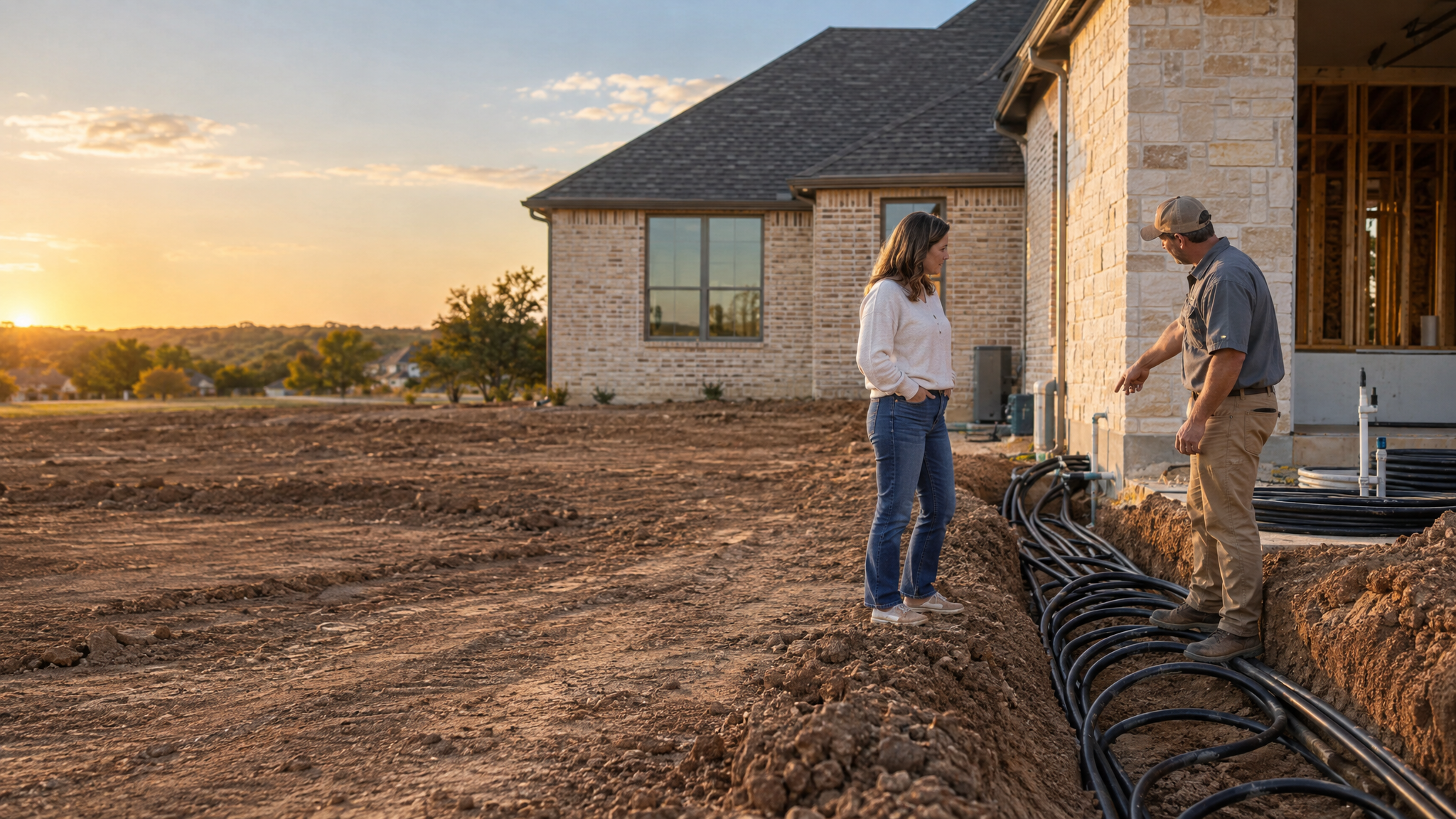
Geothermal usually costs more to install than conventional HVAC, mainly because of the ground loop. That's why it makes sense to look at it over a long ownership period rather than on day-one price alone: lower annual operating costs accumulate year after year.
New construction can improve the math, because the loop can be installed while the site is already being excavated. Ask providers for a written estimate that separates loop cost from equipment cost, and check for any utility rebates or incentives available at the time you build.
Benefits Beyond Your Utility Bill
The National Laboratory of the Rockies notes that geothermal heat pumps can handle space heating, cooling, and domestic hot water while reducing building energy use and peak electrical demand relative to traditional HVAC. Lower peak demand matters in North Texas, where summer afternoons put heavy strain on the grid.
How to Decide
Geothermal tends to make the most sense when you plan to stay in the home for many years, you're building new or doing major site work, and your lot and soil support a practical loop design. It may not make sense if the budget is tight upfront, the site is difficult to drill or trench, or you expect to move soon.
If you'd like a real-world comparison for your property, Climate Codes can connect you with a DFW provider experienced in geothermal who can quote both geothermal and conventional options.